
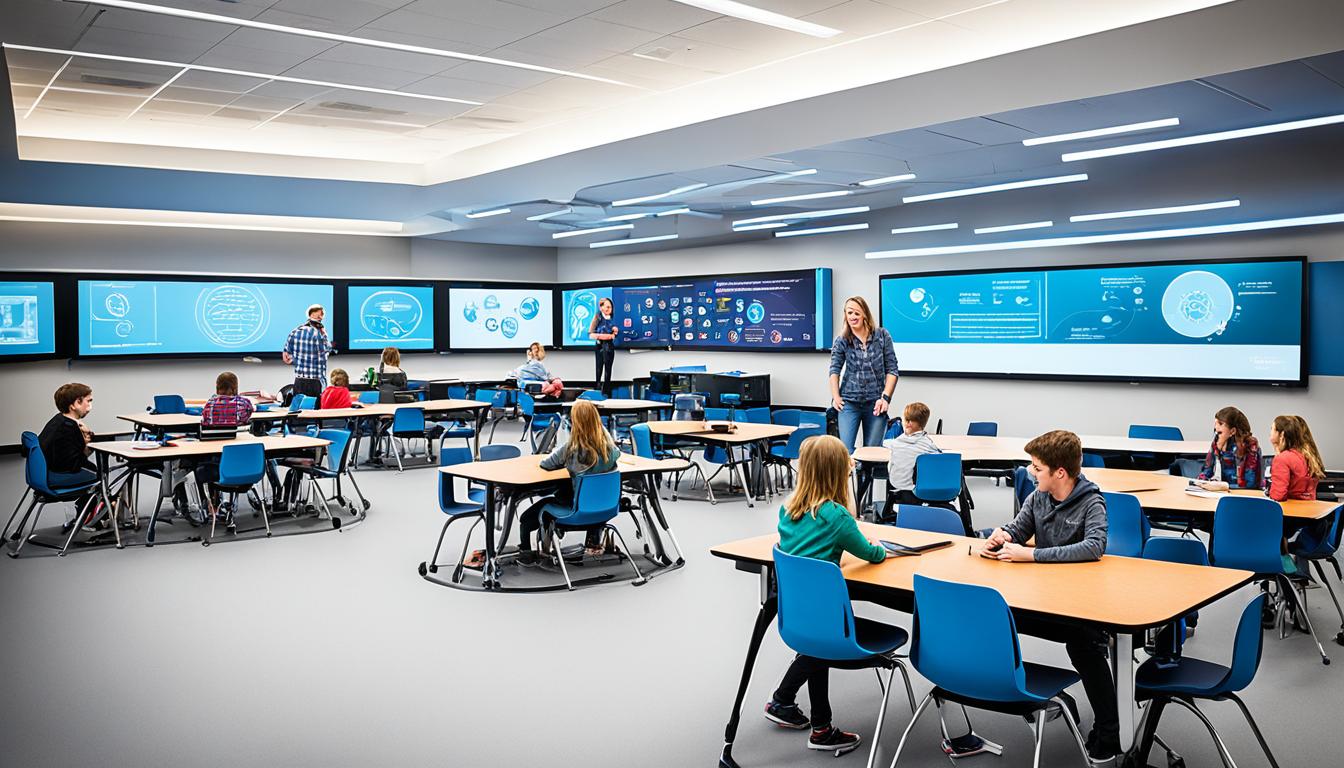
The world of education is changing fast, bringing new trends and possibilities. This guide shares 10 key insights on what the future of learning might look like. It covers personalized learning, immersive experiences, and how technology and sustainability will shape education.
Tomorrow’s education will offer learning paths tailored to each student, thanks to technology and data. Classrooms will become places where students work together and learn through projects. This will help them develop skills needed in today’s global world.
Learning will be a lifelong journey, with people constantly updating their skills to keep up with new technology. Artificial intelligence will help make learning more personal and effective, changing how we teach and learn.
As the world connects more, education will focus on global and cultural learning. This will help students succeed in a diverse world. Learning about sustainability and the environment will also become key, preparing students to tackle big challenges.
Join us as we explore the future of education. Discover how these changes will shape our learning and prepare us for tomorrow’s world.
Personalized Learning Paths
The future of education is changing, moving from a one-size-fits-all approach to a more personalized way. Adaptive technologies and data analytics help teachers make customized curricula for each student’s needs and abilities.
Now, schools use real-time data and machine learning to create personalized learning paths. This approach boosts student engagement and performance. It also makes learning more meaningful for each student, helping them grow at their own speed.
Adaptive Technologies and Data Analytics
New adaptive technologies are changing how we learn. These smart systems watch how students progress, find out what they don’t know, and change the learning content to fit each student. Data analytics give teachers insights into how students learn best, helping them make the customized curricula better.
Customized Curricula for Individual Needs
The future of education is about helping students reach their highest potential. With personalized learning and adaptive technologies, schools can offer customized curricula for everyone. This way, students learn better, stay motivated, and grow personally, preparing them for a lifetime of learning.
Immersive and Interactive Experiences
The future of education is set to be more immersive and interactive. Technologies like virtual reality (VR), augmented reality (AR), and gamification are changing how students learn. These tools make learning deeper, help students remember more, and make it fun.
Virtual reality takes learners into simulated worlds. They can touch and interact with digital objects as if they were real. This makes learning complex topics like anatomy or history more engaging.
Augmented reality combines the digital and real worlds. Students can see virtual info and visuals right in front of them. This makes hard-to-understand concepts clear and easy to grasp.
Gamification adds game-like elements to learning. It makes education an interactive, goal-driven adventure. Students are more likely to take part, solve problems, and remember what they learn. This new way of learning is turning classrooms into exciting places that suit different learning styles.
Engaging Insights into Educational Trends
The world of education is always changing. Understanding these changes is key to shaping the future of learning. By looking at new research and evidence, teachers can see how education is evolving.
Analyzing Data-Driven Insights
Learning analytics have changed how teachers teach. They use data to spot trends and areas to improve. This leads to teaching methods that are more tailored to each student.
They track how students do and how new teaching methods work. This helps make better decisions in education.
Interpreting Emerging Pedagogical Approaches
Teachers are also looking at new ways to teach. These methods focus on using technology and making learning more interactive. They aim to make students more engaged and better understand complex topics.
By understanding these new trends, teachers can update their teaching. This helps students get ready for the challenges of today and tomorrow.

Collaborative and Project-Based Learning
The future of education is changing, focusing more on teamwork and project-based learning. This approach helps students develop skills needed for today’s connected and fast-paced work environments. It makes learning active and focused on the student, building important skills like problem-solving and teamwork.
Fostering Teamwork and Communication Skills
Working together on projects, students share ideas and solve complex problems. This helps them learn key skills like teamwork and communication. By doing group projects, they get better at listening, compromising, and sharing their thoughts. These skills are crucial for working together in today’s jobs.
This focus on teamwork and communication prepares students for the future. It gives them the skills to handle the challenges of a changing world. This makes them valuable in a job market that’s always evolving.
Lifelong Learning and Continuous Upskilling
In today’s fast-changing world, lifelong learning and upskilling are key. Schools are changing to help workers keep up with new skills and job needs. This focus on lifelong learning helps people stay ahead, ready for new challenges and chances.
Technology and society are changing fast, making the old way of learning outdated. Now, people need to keep learning throughout their careers. This means getting new skills and adapting to job changes. Programs for adult learning and workforce development are growing, meeting the need for ongoing learning.
Learning for life is not just about getting new tech skills. It’s also about thinking critically, solving problems, and being adaptable. These skills are key for doing well in today’s complex work world. By always looking to grow and learn, people can make their careers last longer and help the workforce succeed.
As lifelong learning and upskilling become more important, schools are finding new ways to help. They offer online courses, microcredentials, and learning paths that fit different career stages. The way we learn is changing, thanks to new tech like AI-powered learning platforms.
Integration of Artificial Intelligence
Artificial intelligence (AI) is changing how we learn. AI-powered tutoring gives students learning experiences tailored to their needs and styles. This use of AI helps schools deliver better learning results, helping students achieve their best.
AI-Powered Personalized Tutoring
AI is making learning different. AI-driven tutors check how students are doing, find what they don’t know, and give them feedback. This way, students learn at their own speed, understand better, and do better in school.
Intelligent Adaptive Learning Platforms
AI is making learning smarter. These platforms change what students learn, how fast they learn it, and how hard it is based on what they can do. This means every student gets the help they need, making learning more fun and effective.

Blended Learning Environments
The future of education is changing fast, with blended learning becoming more popular. This method mixes online and in-person teaching. It gives students a flexible, engaging way to learn.
Students get to use both digital and traditional teaching methods. This means they can learn at their own pace and get more from their classes. They also get better at using technology, which is key for today’s world.
Blended learning combines the best of online and in-person learning. Students can do their homework and join discussions online. But they also get to meet teachers and friends in person. This way, students can learn how they like best and move at their own speed.
Technology is a big part of blended learning. Tools like interactive whiteboards and virtual simulations make learning fun and personal. These tools help students learn better and get ready for the future jobs that need digital skills.
As education changes, blended learning will become even more common. It offers students a way to learn that’s both dynamic and ready for the future. By using both online and in-person learning, schools help students get the skills they need to succeed.
Global and Cross-Cultural Education
In today’s world, education focuses more on global and cross-cultural learning. Schools are getting students ready for a global world by teaching them about different cultures. They also encourage working together with people from other countries and developing skills for success in a changing world.
Students learn everything they need to be global citizens through a well-rounded education. This kind of education gives them the knowledge and skills they need to do well in a global setting. It helps them understand different cultures and prepares them for the 21st century.
Preparing Students for a Globalized World
Schools are making sure their students learn about the world and different cultures. This helps students value diversity, work well with people from other backgrounds, and think critically about global issues.
Students learn through experiences that bring different cultures together. They also learn about their role in a global community. This education makes them adaptable, understanding, and ready to help the world.
Sustainability and Environmental Education
The future of education is all about tackling sustainability and environmental issues. Schools are adding sustainability education and environmental education to their programs. This helps students learn about eco-literacy, get involved in green initiatives, and understand how our actions affect the planet.
This move towards sustainability-focused learning aims to create a generation that cares for the environment. Schools are teaching about climate change education and nature-based learning. This prepares students to face the big environmental challenges we have today.
By teaching sustainable development and caring for the environment, schools are helping shape a better future. With the world facing big challenges like climate change, this change in education is key. It helps the next generation become leaders for a greener, more sustainable world.