Education innovation is changing how we learn, making it more accessible and effective worldwide. Online learning and educational technology allow for personalized experiences, collaborative classrooms, and adaptive assessments. This shift is reshaping education, letting students learn at their own pace and engage with materials in new ways.
Studies show that education innovation can boost learning results, make education more accessible, and close gaps. By using innovation, online learning, and technology, we can make education more inclusive and effective. Technology has opened doors for learning, allowing students to access top-notch educational resources from anywhere.
As we look ahead, it’s key to understand the current state of education innovation and its global impact. By adopting new methods and technologies, we can build a better future for students and teachers. This future will be marked by greater accessibility, better learning outcomes, and a more tailored approach to education.
What is Education Innovation?
Education innovation means using new and creative ways to make education better and more accessible. It often involves technology, like adaptive assessments, to offer personalized learning for students. This helps create collaborative classrooms where students can engage, be creative, and think critically.
Studies show that innovation in education boosts student engagement, grades, and teacher happiness. By adopting new methods, teachers can tackle today’s educational hurdles.
At its heart, education innovation is about finding new ways to teach and learn. It might include new tech, like online courses, or fresh teaching styles, like project-based learning. This way, teachers can tailor lessons to meet each student’s needs, preparing them for a dynamic world.
Education innovation is not just about new tech, but about a culture of trying new things in class. It’s about letting teachers experiment and learn from their efforts.
By encouraging innovation, teachers can make classrooms more collaborative, creative, and effective. This might mean using collaborative classrooms or adaptive assessments for personalized feedback. The aim is to create a learning space that gets students ready for the 21st century.
Technology’s Role in Education Innovation
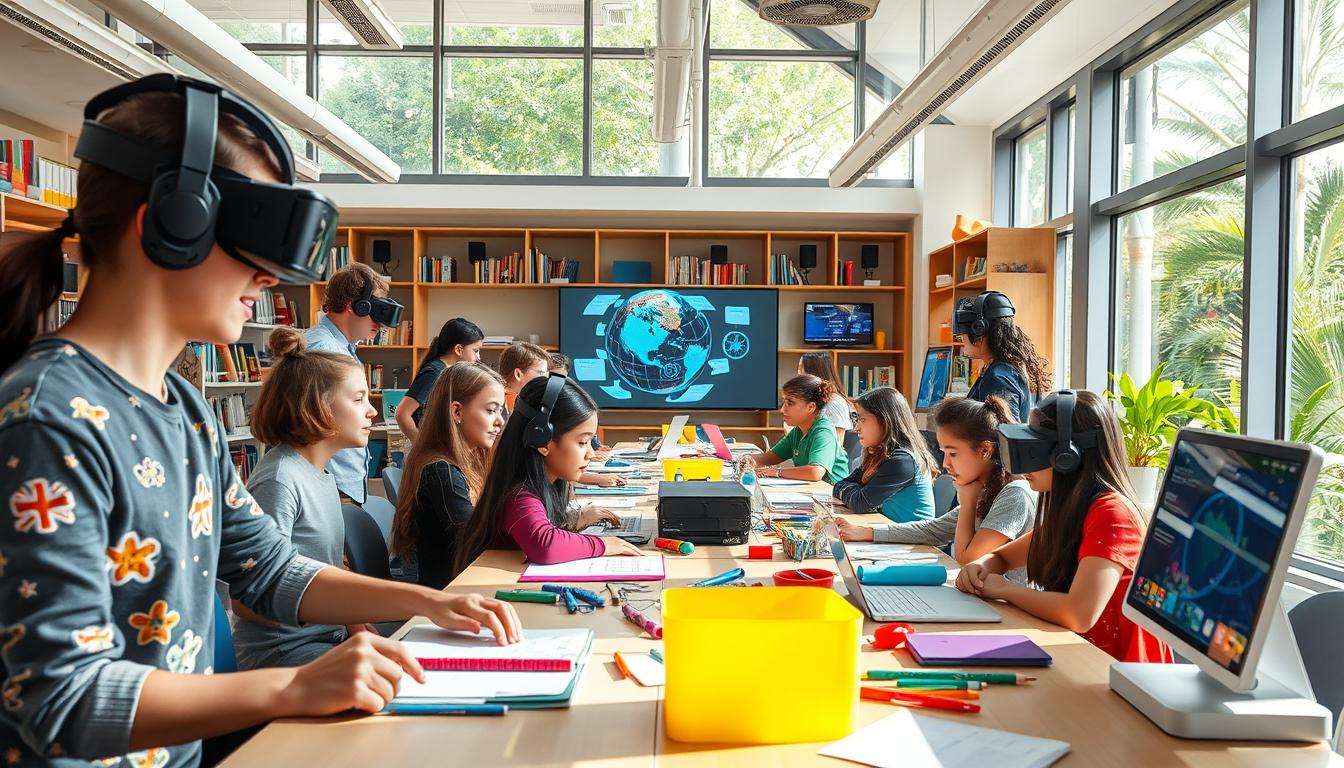
Education is changing fast, thanks to educational technology. This change brings new ways to learn, like virtual reality in education. It makes learning fun and memorable.
Artificial intelligence in education is also becoming popular. Schools use AI to help students learn better. It automates tasks and gives feedback right away. This lets teachers focus on teaching.

More schools are using virtual reality, artificial intelligence, and learning systems. This trend will keep growing. Schools want to use educational technology to help students succeed.
The right use of technology in schools can really help students learn. It’s a key part of making education better.
As educational technology gets better, we’ll see new uses for virtual reality in education and artificial intelligence in education. Teachers can make learning more fun and effective. This prepares students for a complex world.
Collaborative Learning Environments
Creating collaborative classrooms is key for teamwork, better communication, and more student involvement. Research shows that teamwork in learning boosts skills that last a lifetime. Inclusive education is vital in making these spaces, where everyone feels important and supported.
To make effective collaborative learning spaces, we need to think about a few things. These include flexible seating, using technology, and sustainable education practices. These elements help students work together, respect each other, and learn better. It makes learning fun and prepares students for a global world.
Using collaborative classrooms and inclusive education helps make learning better for everyone. As we keep improving education, focusing on sustainable education practices is critical. It ensures success and well-being for students, teachers, and our planet.
Collaborative learning environments have the power to transform the way we learn and interact with one another. By embracing this approach, we can create a brighter, more sustainable future for generations to come.
Project-Based Learning: A Practical Approach
Using project-based learning in class can really boost student results. It makes learning fun and relevant by tackling real-world problems. This method also lets students show what they know in flexible ways.
Project-based learning is great for personalized learning. It lets students learn at their own speed and choose topics they like. This is even better when combined with adaptive assessments. These assessments help find out where students need more help or a challenge.

Teachers should make projects that follow project-based learning rules. This means giving students choices and letting them work together. It also means encouraging feedback from peers. This way, students feel supported and can grow creatively and academically.
By embracing project-based learning and adaptive assessments, educators can create a more student-centered and effective learning experience. This prepares students for success in today’s complex world.
Gamification in Education
Gamification in education is becoming more popular. Many educators and researchers are looking into how it can improve learning. By adding game elements to online learning, students become more engaged and motivated. Gamification in education has shown to boost grades and make students happier.
One big plus of gamification in education is that it makes learning fun. Educators use game-based assessments and technology to make learning more immersive. This is great for online learning, where students might feel left out.
As technology in education keeps getting better, we’ll see more cool uses of gamification. Imagine virtual reality field trips or interactive simulations. Gamification and online learning can make learning more fun and effective. This helps students get the skills they need for today’s world.
Gamification is a powerful tool for increasing student engagement and motivation, and it has the power to change education.
Gamification in education is a promising trend. It has the chance to change how we learn and teach. By using game design in online learning, educators can make learning more engaging and effective. As we keep exploring gamification, we’ll see even more creative ways to use it in education.
Flexible Learning Spaces
Creating flexible learning spaces is key for an inclusive learning environment. It involves making physical areas adaptable to different student needs. This supports collaborative classrooms and inclusive education.
Using modular furniture and technology, educators can make spaces that encourage creativity and teamwork. This helps students engage better and interact socially.
Studies show that flexible learning spaces boost student success and teacher teamwork. For example, students in such environments do better in school and stay motivated. This approach makes learning more effective and fun for everyone.

Creating adaptable, inclusive learning spaces is vital. Collaborative classrooms and inclusive education are essential. By focusing on flexible learning spaces, educators can make learning fair for all. This leads to better grades and a more positive school experience.
By designing learning spaces that are flexible, collaborative, and inclusive, we can create environments that inspire creativity, foster social interaction, and promote academic excellence.
Global Perspectives on Education Innovation
Education innovation is happening all over the world. Countries and regions are finding new ways to make learning better. Sustainable education practices are being used everywhere, focusing on the environment, social responsibility, and making education affordable. From Asia to Europe, and the Americas, global perspectives are changing how we learn.
International education models are showing success. Finland values fairness and inclusivity, Singapore focuses on teacher training, and Canada uses education innovation hubs. These methods have improved student results, made teachers happier, and used resources better. By learning from these examples, educators and policymakers can find new ways to improve education in their areas.
As the world gets closer together, global perspectives on education are more vital. By sharing ideas and experiences, we can build a fair, effective, and sustainable education system for everyone. This means understanding how education, culture, and society connect, and always looking to improve. By embracing education innovation and sustainable education practices, we can make a better future for future generations.
Education is the key to unlocking the full power of people, communities, and societies. By working together to advance education innovation and sustainable education practices, we can build a more just, equitable, and prosperous world for all.
Inclusion and Accessibility in Education
Creating learning environments that welcome all students is key for inclusive education. This method helps all students, no matter their abilities. By using accessible learning materials and assistive technology, every student gets a fair chance to succeed.
Using universal design principles is a great strategy. It means designing materials and activities that everyone can use from the start. For instance, digital textbooks help students with disabilities.
Assistive technology is also vital. Tools like text-to-speech software help students with disabilities fully join in. These tools make learning fair for everyone.
Inclusive education is not just about providing access to learning, it’s about creating a supportive and inclusive learning environment that values diversity and promotes social inclusion.
By focusing on inclusive education, educators can make learning better for all. This approach boosts student success and supports diversity and inclusion in the classroom.
Emotional and Social Learning Integration
Emotional intelligence and social skills are key for success in school and life. Studies show that character education and social learning lead to better relationships and grades. This is because emotional intelligence helps students manage feelings, understand others, and make smart choices.
There are many ways to add emotional intelligence and social learning to school. We can teach students to know themselves, control their emotions, and handle relationships. Character education programs focus on these skills, along with academics. This way, students get ready for life’s challenges.
Teachers must see the value of emotional intelligence and social learning in school. By teaching these skills, we help students grow into caring and successful people. We can do this by adding character education and social learning to the curriculum. And by giving students chances to use these skills in real life.
By teaching students the skills they need to succeed, we can help them become confident, capable, and compassionate individuals who are prepared to make a positive impact in the world.
The Role of Educators in Innovation
Teachers are key to bringing new ideas and tech into classrooms. Teacher professional development helps them keep up with the latest in education. This way, they can make learning more fun and effective.
By growing and learning, teachers help create a culture of innovation. This is important for excellence in schools.
Good educational leadership is also vital. Leaders who support trying new things inspire teachers. This leads to better learning for students.
By focusing on teacher professional development and educational leadership, schools can innovate. They prepare students for today’s world.

Teachers need support to be innovators and leaders. They need the latest tech, places to work together, and chances to grow. By investing in teacher professional development and educational leadership, schools can help teachers reach their full ability. This drives real change in education.
Future Trends in Education Innovation
The future of education is full of exciting changes. New technologies and fresh ideas are changing how we learn. Artificial intelligence (AI), blockchain, and the Internet of Things (IoT) are leading this change.
AI can make learning personal by adjusting to each student’s needs. Blockchain helps keep academic records safe and in control of learners. The IoT makes classrooms smarter and learning more fun.
New business models and teamwork are also changing education. We’ll see more flexible learning paths and chances to learn throughout life. Schools, businesses, and communities will work together to make education more relevant and effective.
The future of education looks bright. It will empower learners, improve teaching, and prepare people for the 21st century and beyond.