
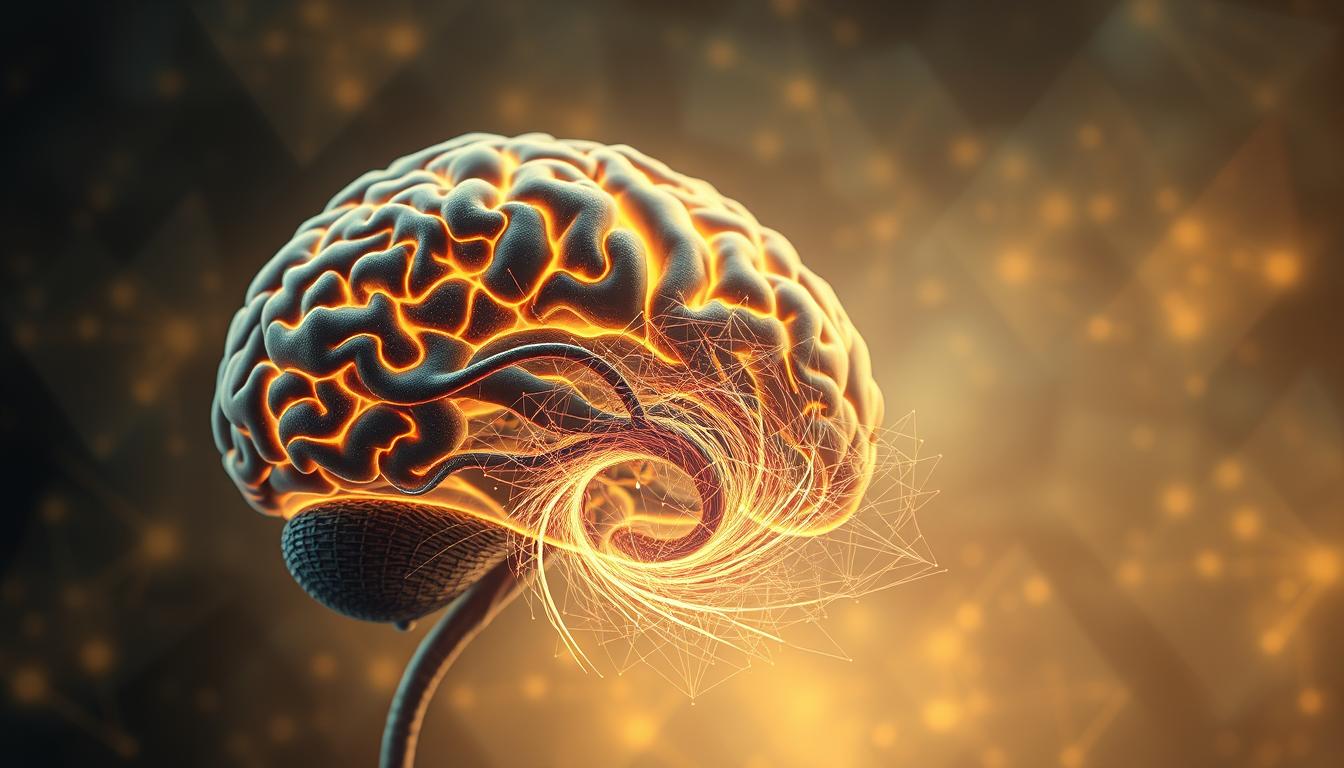
Decision making is a complex process. It involves looking at options, thinking about the outcomes, and choosing what to do. The prefrontal cortex, a key part of our brain, helps us make decisions. Thanks to neuroscience, we now understand how our brain functions and affects our choices.
Studies show that different brain paths are used for different decisions. The brain’s reward system gets more active when we face risks or uncertainty. Knowing how our brain makes decisions can help us make better choices. By learning about the latest in neuroscience, we can understand decision making better and make smarter choices.
Good decision making uses both logic and feelings. This shows why emotional intelligence is key in management. By improving self-awareness, controlling our emotions, showing empathy, and being good with people, we can make better decisions. In this article, we’ll explore neuroscience to understand decision making better and give tips on how to improve your skills.
The Neuroscience Behind Decision Making
Decision-making is a complex process that involves many brain areas. Neuroscience has made big strides in understanding how our brains make decisions. The prefrontal cortex is key in evaluating options and choosing what to do next.
This area of the brain is called the executive center. It handles tasks like planning, reasoning, and making decisions.
But the prefrontal cortex isn’t the only part of the brain involved. The striatum, a key area, has three sub-regions. The ventral striatum is most active at the start of decision-making. The dorsomedial striatum adjusts as the decision is considered. The dorsolateral striatum helps prepare for action after a decision is made.

Research shows the prefrontal cortex is active in all decision-making. It’s not just about self-control. The specific network in the prefrontal cortex is active when we decide between choices. This shows how the dorsolateral and ventromedial prefrontal cortex work together.
Understanding decision-making at a neural level can help us make better choices. It sheds light on the brain regions and processes involved. This knowledge can improve our decision-making abilities.
Understanding Your Brain’s Decision-Making Process
The decision-making process is complex, involving many brain areas like the prefrontal cortex and hippocampus. Emotions greatly affect our choices, shaping how we see things, what we want, and how we act. Cognitive bias can also sway our decisions, leading to choices that aren’t the best. Knowing how emotions and bias work in decision-making helps us make better choices.
Studies show that the prefrontal cortex and hippocampus talk to each other during decision-making. The prefrontal cortex handles working memory, while the hippocampus deals with long-term memory. Damage to the frontal lobe can mess up our decision-making skills, showing how key this area is.
The decision-making process has four main steps. First, initial stimuli excite neurons in the hippocampus. Then, secondary stimuli reach the hippocampus. Next, information goes to the prefrontal cortex. Lastly, the prefrontal cortex makes the final choice.

Model Predictive Control (MPC) is a method to improve decision-making. It uses a prediction horizon and control horizon to make decisions more accurate. Understanding the brain’s decision-making circuits helps us find better ways to make choices and fight cognitive biases.
Emotions play a big role in our choices, sometimes leading to irrational decisions. Recognizing this lets us manage our emotions better. We can learn to spot emotional cues and find ways to reduce their impact. This way, we can make more rational and informed decisions.
The Impact of Emotions on Brain Function During Choices
Emotions greatly influence our decisions, with studies showing 95% of choices are made without thinking. This emotional impact can speed up decision-making by 20% compared to rational thinking. The brain’s reward system, which releases dopamine, drives us to choose certain options.
Research shows people who make emotional choices are 30% more likely to be happy with them. Also, using emotional intuition can lead to a 50% increase in achieving personal goals. 
Being aware of emotions in decision-making can improve results by up to 35%. The somatic marker hypothesis explains that emotions mark options as good or bad based on our body’s state. Knowing how dopamine and other neurotransmitters work can help us make better choices, improving brain function.
Adding emotional awareness to decision-making can be very helpful. Teams that understand emotional dynamics in decision-making are 50% more effective. Recognizing how emotions affect our choices can lead to better decisions and more satisfaction.
Common Cognitive Biases Affecting Your Choices
Our brains often use mental shortcuts when making decisions. This can lead to cognitive biases
Social norms play a big role in these biases. The people and culture around us shape our views and actions. For example, if we’re around people who like a certain brand, we might choose it too, even if it’s not right for us.
It’s important to understand cognitive biases and how social norms influence them. By knowing about biases like confirmation bias and anchoring bias, we can make better choices. This can lead to success and happiness in our lives.
There are over 175 cognitive biases we face. Knowing about them helps us make better decisions. We can then choose more intentionally, based on what we value and want to achieve.
The Science of Intuitive Decision Making
Intuitive decision making uses pattern recognition and other brain processes for quick, instinctive choices. Research shows the brain’s networks can spot patterns and predict outcomes based on past experiences. This helps us make decisions without much thought.
Experts in high-pressure jobs, like firefighters and neonatal nurses, rely on past experiences for about 80% of their decisions. This leads to automatic choices in familiar situations.
Studies show skilled intuitive decision makers can handle uncertainty well. This is common in real-world critical decisions. Scenario-based training improves decision-making skills by 30% to 40%.
Learning from experienced professionals can boost intuitive decision-making by about 25%. This means better decision quality.
Environmental Factors That Shape Brain Decisions
Our brain’s decisions are shaped by many environmental factors, like culture and social norms. These elements guide us in choosing what’s best. For example, our culture’s values can greatly affect our choices. Studies show that different cultures lead to different brain functions and structures.
It’s key to understand how cultural and other environmental factors affect our decisions. Decision making is complex, involving weighing evidence and considering many viewpoints. Knowing how these factors influence our brains helps us make better choices.
To make good decisions, we must grasp the role of environmental factors. By looking at how culture and other factors impact our choices, we can make smarter decisions. This leads to better results and a happier life.
Habits That Enhance Brain Function for Better Decisions
Healthy habits can boost brain function, helping us make better choices. Regular exercise increases blood flow to the brain, keeping it sharp. Eating lots of veggies and lean proteins, and less processed foods, also helps keep our minds clear.
Practicing mindfulness is another way to improve brain function. It helps us make decisions based on facts, not emotions. Studies show mindfulness can grow brain tissue, leading to smarter choices.
Managing stress and getting enough sleep are also key for brain health. Too much stress can harm our brain, while good sleep keeps it working well. By focusing on these habits, we can make smarter choices and live a happier life.
Tools and Techniques for Improved Decision Making
Good decision-making is key for success in life and work. Many models, tools, and techniques can help make better choices. The rational choice theory, for example, helps evaluate options and make decisions.
Using these models can reduce biases and improve decision-making skills. Techniques like the GROW model help in making decisions. It stands for Goal, Reality, Options, and Will.
The Eisenhower matrix categorizes tasks by urgency and importance. It helps prioritize actions. Tools like SWOT analysis and decision trees visualize different paths and outcomes.
Getting team members involved in decision-making can also help. It can uncover and overcome biases. Research shows companies that make good decisions do better than others.
Decision-making models and tools are useful in many areas. They help improve decision-making skills, leading to success and productivity. It’s important to find the right tools for each person or organization and keep improving decision-making.
Breaking Bad Decision-Making Patterns
To break free from harmful decision-making patterns, we need self-awareness and mindfulness. We must challenge our assumptions and biases. By understanding our cognitive biases and decision-making patterns, we can make better choices. Self-awareness helps us see the thoughts and emotions that guide our decisions.
Building self-awareness helps us overcome self-sabotage and adopt better habits. Visualization and practice can strengthen positive decision-making paths. Recognizing the effects of stress and decision fatigue helps us stay focused and resilient.
Improving our decision-making is a continuous journey of self-reflection and learning. By understanding the power of our choices, we can make decisions that reflect our values. This leads to positive outcomes and a better life.