
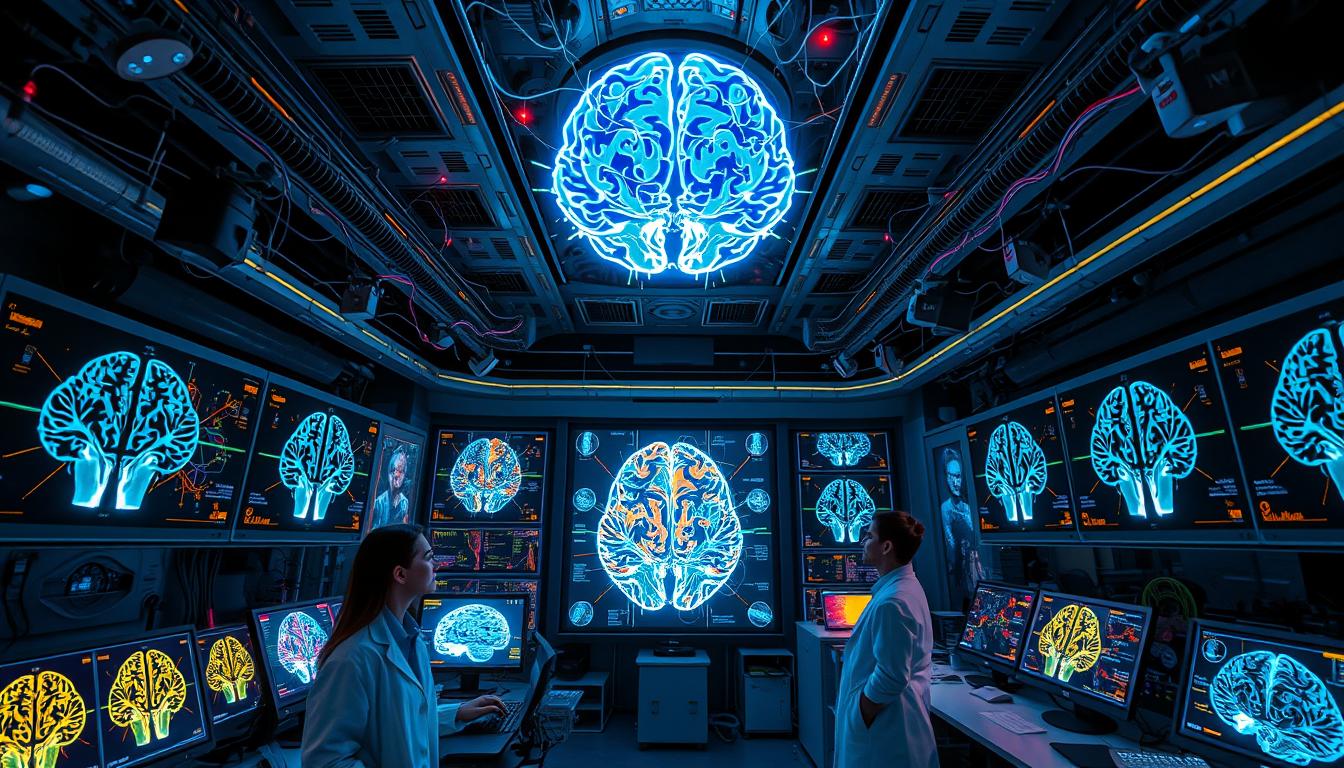
Recent studies have greatly improved our understanding of the brain. They show its complex nature and abilities. This knowledge helps us see how the brain can change and adapt.
This new understanding has big implications. It could help us improve brain function and make our lives better. It shows how neuroscience discoveries can impact our daily lives.
Scientists are making new discoveries in brain research. They are finding new ways to understand and improve brain function. This progress is thanks to brain imaging technologies that give us deep insights into the brain.
Exploring brain development, memory, and learning can change our lives. Brain research helps us understand the brain’s functions and capabilities. This leads to better brain health and well-being, thanks to recent discoveries and research.
Unveiling the Mysteries of Neuroplasticity
Neuroplasticity is how our brains change and adapt. It has changed how we see brain development and how it works. This idea is key in shaping our brain’s structure and function, mainly in kids and teens. By learning about neuroplasticity and brain development, we can find new ways to boost brain function and support healthy brain development.
Studies show that neuroplasticity is key in learning and remembering things. When we learn new skills or info, our brain makes new connections between neurons. This strengthens old connections and creates new paths. This process is vital for brain development and can be affected by things like our environment, experiences, and genes.

Understanding neuroplasticity and its role in brain development can lead to better treatments for brain disorders. It can also help improve brain function in people with injuries or diseases. By using neuroplasticity, we can open up new ways to support brain development and enhance brain health.
As we learn more about neuroplasticity and brain development, we might find new ways to support healthy brain development. This could lead to a better life for people of all ages.
Breakthroughs in Understanding Memory Formation
Recent studies have uncovered the complex process of memory formation. They show how neurotransmitters like dopamine and acetylcholine help solidify memories. This knowledge helps researchers find new ways to treat memory problems and learn more about learning techniques.
The process of memory formation involves many brain areas and neurotransmitters. Finding out how dopamine and acetylcholine help in memory formation is a big deal. It opens doors to new treatments for memory issues. It also helps us understand better learning techniques to improve memory formation.

As we learn more about memory formation and learning techniques, new ways to boost memory formation will come up. By using science and learning techniques, people can work on improving their memory formation and learning skills.
Understanding the neural mechanisms behind memory formation is key for effective learning techniques. By exploring the secrets of memory formation, researchers can develop new ways to enhance learning and memory.
The Impact of Brain Imaging Technologies
Brain imaging technologies have changed neuroscience a lot. They let researchers look at brain activity without hurting it. This helps find patterns linked to many brain and mental health issues. It also helps doctors make better treatments.
These technologies show how neurotransmitters and brain function are connected. This is a big step forward in understanding the brain.
Functional magnetic resonance imaging (fMRI) and positron emission tomography (PET) are key tools. They let us see the brain in great detail. This has given us new insights into how the brain works and how it affects our behavior.
For example, fMRI studies have found brain activity patterns linked to depression and anxiety. This is a big discovery.
Brain imaging has also led to new treatments. One example is transcranial magnetic stimulation (TMS). It uses magnetic fields to boost brain activity. TMS has helped reduce symptoms of depression and anxiety.
It’s now used for many other brain issues. As research grows, brain imaging will keep being key in treating brain disorders. It will also help us learn more about neurotransmitters and brain function.
Brain imaging technologies have the power to change neuroscience. They will likely be key in creating new treatments for brain disorders.
How Neurotransmitters Influence Behavior
Neurotransmitters like serotonin and dopamine are key in controlling mood and behavior. The gut-brain connection also affects how these neurotransmitters are made and controlled. This shows how complex the relationship between neurotransmitters, mood, and brain health is. Studies have found that imbalances in neurotransmitters can lead to mood disorders like depression and anxiety.
A strong gut-brain connection is vital for good brain health. The gut microbiome makes neurotransmitters and hormones that control mood, hunger, and sleep. If the gut microbiome is out of balance, it can change how neurotransmitters are made. This can affect mood and behavior. Learning about the gut-brain connection and its role in neurotransmitters can lead to new treatments for mood disorders and better brain health.

Understanding the gut-brain connection and neurotransmitters is important for brain health. To support your brain, eat well, exercise, and manage stress. A healthy lifestyle can help keep neurotransmitters balanced. This improves overall well-being and lowers the chance of mood disorders.
As research digs deeper into the gut-brain connection and brain health, we’ll see new treatments for mood disorders and other brain conditions.
The Gut-Brain Connection
The gut-brain connection is a complex network that plays a key role in our health. It’s vital for dealing with brain disorders and neurological disorders. The gut microbiome makes neurotransmitters and hormones that affect our mood and behavior.
An imbalance in the gut microbiome, or dysbiosis, is linked to many neurological disorders. These include anxiety, depression, and Parkinson’s disease.
Learning about the gut-brain connection helps researchers find new treatments for brain disorders. For instance, some probiotics can help with anxiety and depression by changing the gut-brain axis. Also, eating foods high in fiber and polyphenols can help grow good gut bacteria. This supports brain health.

As we learn more about the gut-brain connection, it’s key to keep our gut microbiome healthy. By choosing healthy foods and managing stress, we can help our gut-brain axis. This can lower the risk of neurological disorders. It’s a way to actively support our brain health and overall well-being.
The gut-brain connection is a two-way street, and by taking care of our gut health, we can also support our brain health. This complex relationship highlights the importance of a holistic approach to health, one that considers the intricacies between our gut, brain, and overall well-being.
Advances in Treating Brain Disorders
Recent breakthroughs in artificial intelligence have changed the game in neuroscience. They’ve led to new ways to diagnose brain disorders. Clinicians can now spot patterns in brain scans linked to different conditions. This means better treatments for many brain-related issues.
Brain-computer interface tech is also making waves. It lets people control devices with their minds. This is a game-changer for those with paralysis, helping them communicate and interact.
As we keep pushing the limits of artificial intelligence in neuroscience, we’re on the cusp of big changes. Machine learning will help tailor treatments to each person’s needs. And brain-computer interface tech will open doors for those with brain disorders to recover and thrive.
The future of neuroscience is exciting and full of possibilities, with artificial intelligence and brain-computer interface technologies playing a key role in shaping the field.
The Intersection of Neuroscience and Artificial Intelligence
Recent studies in neuroscience research have greatly improved our understanding of brain function. This knowledge is helping to create smarter artificial intelligence. By learning how our brains work, scientists can make AI systems that think and act like us.
Researchers are focusing on creating artificial neural networks that mimic the brain. These networks could change how we solve complex problems in areas like computer vision and language processing.
As neuroscience research keeps advancing, we’ll see new uses of brain function in AI. For instance, scientists are working on brain-computer interfaces. These could make interacting with AI systems more natural and intuitive.
The intersection of neuroscience and artificial intelligence has the power to change our lives and work. It’s an exciting area for more research and innovation.
The blend of neuroscience research and AI is growing fast and full of promise. As we learn more about brain function and its use in AI, we’ll see big improvements in healthcare, education, and technology.
Neuroscience and Learning Techniques
Neuroscience is changing education by showing how the brain learns. Teachers use this knowledge to make learning better. Neuroscience applications help find the best ways to learn and remember.
Using neurotechnology in schools can also boost learning. Tools like brain-computer interfaces and neurofeedback help students focus better. This leads to better retention of information.
As neuroscience in education grows, new learning methods will emerge. These methods will use the latest neuroscience discoveries. This way, education will become more effective and tailored to each student’s needs.
The future of education will be shaped by our understanding of the brain and its functions. By applying the principles of neuroscience, we can create a more personalized and effective approach to learning, one that will enable students to reach their full neuroscience applications.
The Future of Neuroscience Research
The field of neuroscience is growing fast, with new discoveries on the horizon. Technologies like optogenetics and CRISPR gene editing are changing how we study the brain. They also open doors to new treatments for brain disorders.
Researchers are learning more about how the brain changes and adapts. This knowledge is leading to personalized treatments for brain injuries and diseases. The future of neuroscience is filled with emerging trends that will change our understanding of the mind and improve healthcare.