
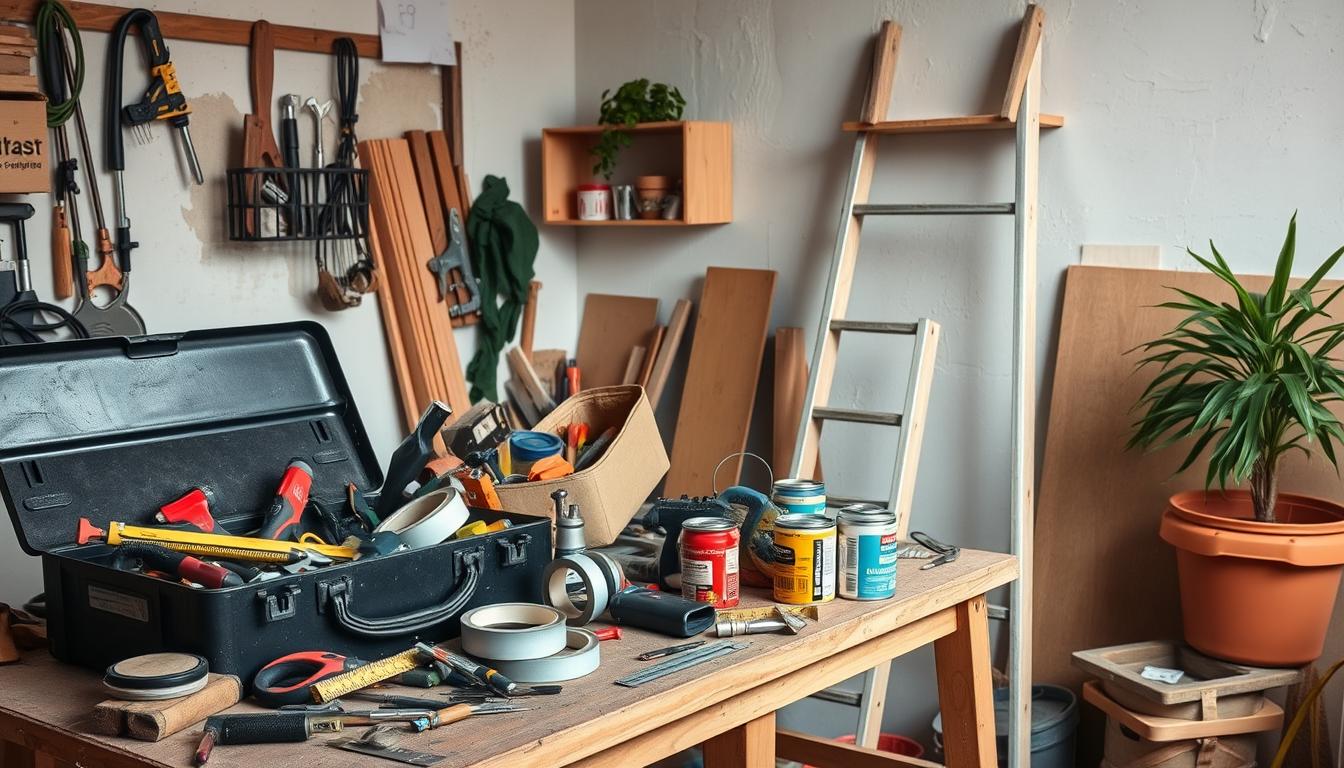
DIY fixes can save you time and money. They help keep your home in top shape. With simple tips, you can fix common problems easily.
Learning DIY fixes can improve your home maintenance skills. You’ll be able to handle many tasks. This way, you can keep your home nice without spending a lot.
We aim to give you the tools to care for your home. Our DIY fixes and maintenance tips are easy to use. This makes fixing things at home simpler than ever.
Understanding the Importance of DIY Fixes
Starting DIY projects can change a homeowner’s life. It brings a feeling of pride and self-sufficiency. Simple repairs can save money and make you feel closer to your home. Household solutions like fixing a faucet or painting a room are fun and rewarding.
DIY repairs offer many benefits. They save money and let you customize your home. With online tutorials, finding household solutions is easier than ever. You can fix appliances or make unique decor pieces.
Doing DIY projects helps you learn new skills. It’s a great way to challenge yourself and make your home better. As you try more DIY, you’ll feel a sense of pride and ownership in your space.
With great power comes great responsibility, and taking on DIY projects is no exception. It’s essential to approach each task with caution and patience, ensuring that the end result is both safe and satisfactory.
In conclusion is not allowed, so let’s just say that household solutions and DIY projects are the way to go for a happy and healthy home.
Common Household Problems You Can Fix
As a homeowner, you’ll face many common problems. Fixing leaks and drywall repair are two big ones. Leaky faucets, clogged drains, and holes in the drywall are just a few examples.
When dealing with fixing leaks, it’s key to act fast. This prevents water damage and expensive fixes. For drywall repair, you need to figure out the damage and what to do next. There are guides to help you fix your drywall like a pro.

Learning to fix these problems saves money and boosts your DIY skills. With the right help, you can handle these issues easily. So, don’t be scared of fixing leaks and drywall repair. Start fixing these problems today and become a DIY pro.
Remember, every small fix can add up to make a big difference in the overall maintenance and upkeep of your home. By staying on top of these common household problems, you’ll be able to enjoy a safer, more comfortable, and more beautiful living space.
Essential Tools for DIY Repairs
Having the right DIY tools is key for any DIY project. A good toolbox makes tasks easier and faster. For household essentials, you need a hammer, screwdrivers, pliers, and wrenches. These tools help with hanging pictures and fixing faucets.
Safety gear is also important. Gloves and goggles protect you from injuries. Having a first aid kit ready is wise. With these tools and safety items, you’re ready for any DIY task.
When building your toolkit, think about the projects you’ll do. For plumbing or electrical work, get a pipe wrench or wire strippers. A multitool is great for general DIY tasks. The right tools and safety gear let you do many DIY projects confidently.
A well-stocked toolbox is the foundation of any successful DIY project. With the right tools and safety equipment, you’ll be able to tackle tasks with ease and confidence.
Step-by-Step Guide to Fixing a Leaky Faucet
Learning to fix leaks is a great DIY skill. It can save you money and help the environment. A leaky faucet is easy to fix with the right tools and patience. You’ll need a wrench and a screwdriver to start.
Faucet repair might seem hard, but it’s simple. First, turn off the water by finding the shut-off valves under the sink. Then, turn them clockwise. Next, take apart the faucet to find where the leak is. You might need to remove the handle or other parts to see inside.

After finding the leak, you can start fixing it. This could mean replacing a gasket or tightening a loose part. Always follow the part’s instructions and make sure everything is tight and watertight.
By following these simple steps, you can fix a leaky faucet and save yourself the hassle and expense of calling a professional plumber. With a little practice and patience, you’ll be well on your way to becoming a DIY expert and tackling even more complex faucet repair projects.
Always turn off the water before starting any repair. And make sure to test the faucet after fixing it. With these tips, you’ll be fixing leaks like a pro in no time.
Repairing Drywall Like a Pro
Many homeowners feel overwhelmed by drywall repair. But, with the right techniques and tools, you can get professional results. The most common issue is patching holes and cracks. First, clean the area around the damage and remove debris or old compound.
Then, apply a new layer of joint compound to the damaged spot. This part of the drywall repair can be tricky. It’s important to apply the compound smoothly and evenly, filling all holes and cracks. After it dries, sand the surface for a smooth finish.
For big holes, use a patching compound made for patching holes in drywall. These compounds are thicker and more durable than regular joint compound. By following these steps and using the right materials, you can get a professional-looking drywall repair that lasts.
Remember, the key to a successful drywall repair is patience and attention to detail. Take your time, and don’t be afraid to ask for help if you need it.
With practice and the right techniques, you can tackle any drywall repair project. Whether it’s patching holes or fixing cracks, you’ll get a smooth, professional-looking finish. This will make your home look its best.
Quick Solutions for Clogged Drains
Dealing with clogged drains can be frustrating. But, there are several methods to clear the blockage. One natural approach is using baking soda and vinegar. This creates a chemical reaction that breaks down the clog.
This method is not only effective but also good for the environment. It’s a great option for drain cleaning.
For more severe clogs, chemical drain cleaning products can be used. But, it’s important to follow the instructions carefully. Also, take necessary safety precautions to avoid any harm.
Regular maintenance is key to preventing clogged drains. Simple habits like not pouring grease down the drain and using a drain screen can help. These habits can keep your drains flowing smoothly.

Preventing clogged drains is often easier than dealing with the aftermath. By being mindful of what goes down the drain, you can avoid the hassle and expense of drain cleaning. Remember, a little maintenance can save you a lot of trouble in the long run. It keeps your drains flowing freely.
Regular drain maintenance is an essential part of home upkeep. By following these simple tips, you can keep your drains running smoothly. And avoid the need for costly drain cleaning services.
DIY Painting Tips for a Fresh Look
A fresh coat of paint can change a room’s look and feel. To get a professional look, follow some important painting tips. Start with wall preparation, which means cleaning, fixing holes, and sanding for a smooth finish.
For wall preparation, remove dirt, grime, and grease. This helps the paint stick better and last longer. Also, use a primer for a uniform base color and to prevent paint from soaking into the walls.
Other key painting tips include picking the right paint and using quality brushes or rollers. Apply thin, even coats. Test the paint on a small area first. By following these steps, you can get a beautiful, lasting finish.
Remember, a fresh coat of paint can completely transform the look and feel of a room, so don’t be afraid to get creative and try out new colors and techniques.
With the right painting tips and practice, you can become a DIY painting expert. Give your home a fresh new look today. See the difference a fresh coat of paint can make!
Energy-Efficient Fixes for Your Home
Making your home more energy efficient helps the environment and saves money. One easy change is to use LED light bulbs. They use much less energy than old bulbs. Sealing air leaks and adding insulation also helps keep your home comfortable all year.
Creating a green home means making small changes that help a lot. Lowering your energy use cuts down on carbon emissions. You can also use power strips for electronics and adjust your thermostat to save energy.

These simple steps make your home more energy efficient and green. It’s good for the planet and your wallet. Start making these changes today to see a big difference.
A green home is not just good for the environment, it’s also good for your health and your wallet. By making a few simple changes, you can create a more sustainable living space that benefits everyone.
Maintaining Your Home: Seasonal DIY Tasks
As a homeowner, it’s key to keep up with seasonal maintenance. This ensures your home stays safe, efficient, and looks great. Each season has its own tasks to do.
In spring, clean up and fix any winter damage. This means cleaning gutters, checking roofs, and fixing sidewalk cracks. Summer is perfect for outdoor DIY tasks like painting or sealing furniture.
Fall is for getting ready for winter. Check your heating system, seal drafts, and store outdoor items. Winter needs special care to avoid damage from cold and snow. Insulate pipes, seal gaps, and keep gutters clean.
By keeping up with seasonal maintenance and doing these DIY tasks, you avoid expensive repairs. You also save on energy bills and keep your home looking great all year.
Resources for Further DIY Learning
If you’ve caught the DIY bug, there are many resources to help you grow. Online tutorials and books are great for learning more. YouTube channels focused on DIY offer step-by-step guides for many projects.
Home improvement stores also have free workshops. They teach everything from basic plumbing to advanced woodworking. Having reliable DIY books on hand is another good idea. They help you build a strong knowledge base.
With the right resources and dedication, you can become a DIY master. You’ll be able to tackle even the toughest household problems with confidence.