The future of education is changing fast, thanks to new tech and what students want. It’s key to look at the trends, challenges, and chances that will change the education world. This includes digital learning and new ways to teach.
As we enter the digital age, education will blend tech with old classrooms. This will open up new ways to learn and innovate, changing education forever.
This change will bring new digital learning spaces. These will make learning personal and reach more people. It will make education more open and effective, focusing on digital learning and innovation.
The Rise of Digital Learning Environments
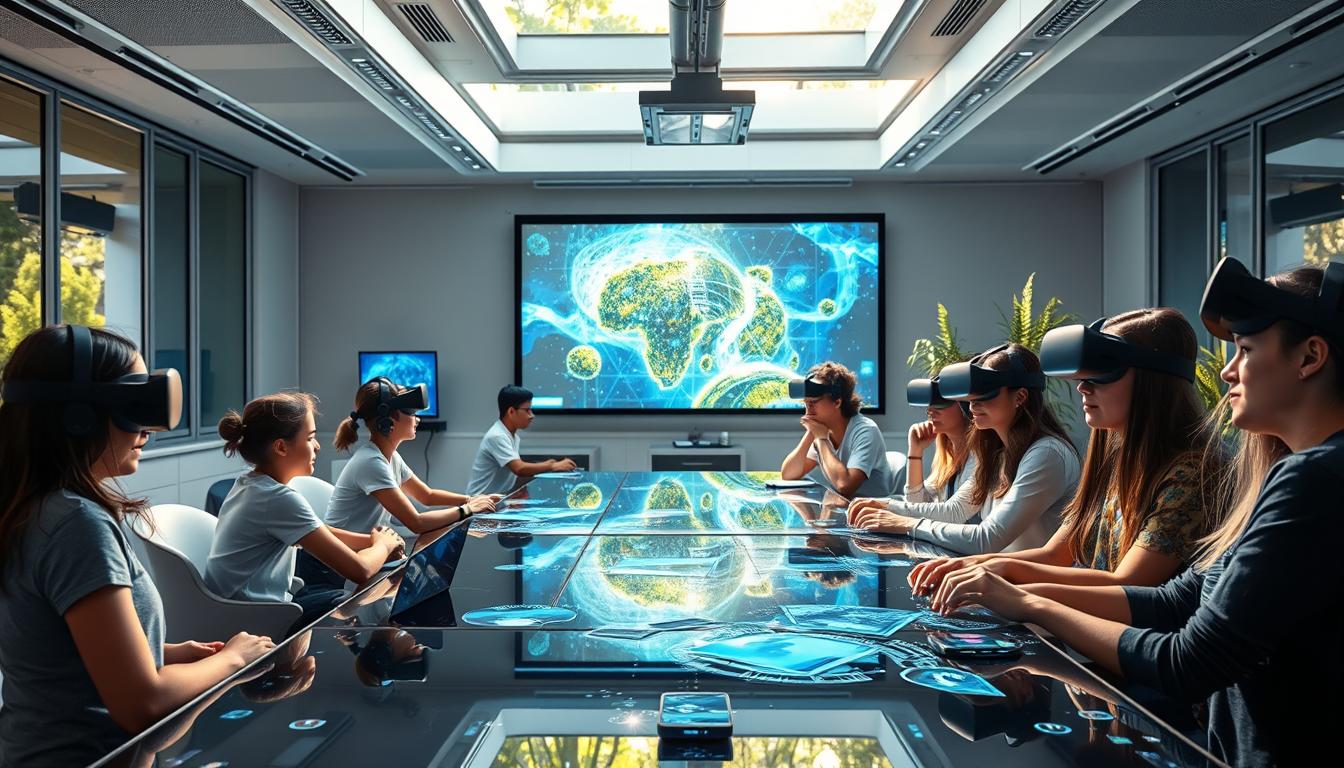
In today’s digital world, online learning is key in education. Educational technology has made new learning environments possible. These digital spaces let students learn at their own speed, with many resources and tools to use.
Digital learning brings many benefits. It makes learning more accessible, personal, and engaging. Teachers can tailor lessons to fit each student’s needs and learning style. This helps students understand complex ideas better and take charge of their education.
Technology keeps getting better, leading to more advanced learning environments. Online learning also boosts teamwork and communication among everyone involved in education. By using educational technology and digital learning spaces, we can make education more inclusive and effective. This prepares students for the challenges of the 21st century.
The future of education depends on our ability to adapt and innovate, leveraging technology to create personalized, interactive, and immersive learning experiences that inspire and motivate students to reach their full potentia.
The Importance of Personalized Learning
Personalized learning is key for the future of education. It lets students learn at their own speed and focus on areas they need to improve. Teachers tailor education to fit each student’s needs, helping them reach their full ability. Student-centered learning focuses on what each student needs and wants, making learning unique.
Technology is driving new ways to support personalized learning. Tools like competency-based progression and adaptive assessments help. These tools let students learn at their own pace and give teachers insights into their progress.

By adopting personalized learning and student-centered learning, teachers can make learning more effective and fun. This approach benefits students and encourages educational innovation. As education evolves, personalized learning will become even more important.
Personalized learning is not just about using technology to deliver learning content, but about creating a learning experience that is tailored to the individual needs and interests of each student.
Integrating Technology in Traditional Classrooms
Education technology is changing how teachers teach and set up learning environments. It makes learning more fun, interactive, and effective. It also helps teachers work more efficiently, give personalized feedback, and help students work together.
Teachers are finding new ways to use education technology to make learning better. For instance, digital tools can give instant feedback, take students on virtual field trips, and open up a world of educational resources. This way, teachers can offer a dynamic and engaging learning experience that gets students ready for the digital world.
The secret to successfully adding technology to traditional classrooms is finding the right balance. Teachers should use technology to improve their teaching methods, not replace them. This way, they can create a learning experience that is both effective and fun for all students. As education technology keeps getting better, we’ll see even more creative ways to teach and learn in the future.
By embracing education technology and innovative teaching methods, we can create a more inclusive and effective learning environment that prepares students for success in the digital age.
Enhancing Accessibility in Education
Creating an inclusive education system is key for giving all students equal chances to learn and succeed. It means removing barriers like physical, cognitive, and linguistic ones. We also need to offer support and services for students with different needs. This way, we make education fairer and more just, celebrating diversity and helping everyone move up.
As we aim for educational equity, we must remember that each student is unique. Personalized support and accommodations help make things fairer. This could mean extra help for students with disabilities, bilingual resources, or learning paths that fit different styles.

By focusing on accessibility and inclusive education, we make learning exciting and diverse. Educators, policymakers, and community leaders must work together. Our goal is to build an education system that’s truly equitable and just for everyone. This way, we empower the next generation to lead, innovate, and make a difference in our complex world.
Education is the key to unlocking the full power of individuals and societies. By making education more accessible and inclusive, we can build a brighter, fairer future for all.
The Evolvement of Teacher Roles
Education is changing fast in the digital age, and so are teacher roles. Teachers now help guide students, not just teach. They need new skills like coaching and mentoring to support learning. This change helps create a learning space that encourages creativity and problem-solving.
Teachers must embrace educational innovation to keep up. They use new teaching methods like personalized learning. Teacher professional development helps them use technology and new teaching ways well.
Teachers must be open to learning and changing with their students. This means moving from being the only teacher to being a co-learner. This shift makes learning more dynamic and prepares students for today’s world. Teacher professional development is key to this change, keeping teachers updated with new teaching methods and educational innovation.
By working together and embracing change, teachers and students can create a brighter future for education, one that is characterized by creativity, critical thinking, and collaboration.
The Future of Standardized Testing
Teachers and leaders are discussing the value of traditional tests. In today’s world, we need new ways to check how well students learn. Ideas like competency-based tests, performance tasks, and project-based evaluations are being explored.
These new methods can give a clearer view of what students know. They help teachers see where students are strong and where they need help.
Assessment and evaluation are key to making sure schools do well. They help ensure students meet learning goals. By using assessment and evaluation in teaching, we can make learning more personal and effective. This way, we can also lessen the focus on standardized testing and look at learning in a more complete way.

To move forward, we must think about how educational accountability will shape the future of standardized testing. By focusing on accountability and assessment, we can make education fairer and more effective. As we face the challenges of education today, the future of standardized testing will depend on innovation, accountability, and putting students first.
By working together, we can create a more just and equitable education system that provides opportunities for all students to succeed.
Lifelong Learning: A New Paradigm
In today’s fast world, lifelong learning is key. It means always updating your skills and knowledge. This helps you stay relevant and grow in your career.
By adopting a growth mindset, you can find new learning chances. This leads to better career opportunities and a more fulfilling life. It also makes the workforce more skilled and adaptable.
Continuous learning keeps you competitive in your field. It lets you learn new skills and adapt to changes. This way, you can enjoy job security, satisfaction, and better well-being.
It also boosts innovation and progress, benefiting everyone. This is because lifelong learning encourages creativity and progress.
Experts say professional development is key to lifelong learning. It involves activities that help you build skills, network, and share knowledge. By doing this, you stay current with trends and improve your career and your organization’s success.
In summary, lifelong learning is a new way that brings many benefits. It helps individuals, organizations, and society grow. By embracing continuous learning and professional development, you can reach your goals and make a difference in your field.
The Globalization of Education
Today, globalization is changing how we learn and teach. It connects learners and teachers worldwide. This helps us understand each other better and learn from different cultures.
Through international education and online learning, we can share knowledge. This makes us more empathetic and open-minded. It prepares us for a global job market.

As we move forward, international education is key. It helps us build a more connected and caring world. Together, we can tackle today’s big challenges.
With globalization, we open doors to new opportunities. It brings growth, innovation, and progress. This shapes a better future for all.
The future of education is global, and it is up to us to ensure that all learners have access to the resources, support, and opportunities they need to succeed in an increasingly interconnected world.
The Role of Parents in the Digital Age
In today’s digital world, parental involvement is key to supporting students. Parents are now more than just spectators. They actively guide their kids through the digital world, helping them love learning more than just in school.
Parents can help by keeping up with new educational trends and tech. They set rules for using digital devices, watch what their kids do online, and teach them to be good digital citizens. Working with teachers and the community, parents help students get ready for the future.
It’s clear that parental involvement is vital for the next generation. By supporting their kids’ education and teaching them about digital responsibility, parents help them succeed. Together, we can make learning fair and open to everyone.
By working together, we can empower students to become active participants in their own learning, equipped with the skills, knowledge, and values necessary to succeed in an ever-changing world.
The Influence of Gamification on Learning
Gamification is a powerful tool for making learning more engaging. It uses game-like features like rewards and challenges to boost student participation. This approach makes learning fun and rewarding, essential in today’s education.
The idea of game-based learning is becoming more popular. It uses game design to create interactive learning experiences. This method can be applied to many subjects, from math to history, making learning more fun and effective.
Gamification helps increase student motivation and engagement. Games give students a sense of accomplishment and progress. This motivates them to learn and practice new skills, leading to better grades.
By using gamification, educators can make learning more engaging and effective. This leads to better grades and more motivated students. It’s a key way to improve education in the 21st century.
Future Skills for the 21st Century
To succeed today, students must learn key future skills like critical thinking and creativity. They also need to be good at communication and working together. These skills help solve complex problems and adapt to new situations.
By focusing on 21st-century skills in school, we get students ready for a changing world. They learn to be flexible, strong, and creative. This way, they can handle the challenges of today and tomorrow.
Teaching future skills and 21st-century skills prepares students for the future. It means keeping up with new technologies and ideas. Together, we can build a better future for all.
The future of education is not just about preparing students for jobs, but about helping them become active, engaged, and responsible citizens who can make a positive difference in the world.
The Ethical Implications of Digital Education
As education moves towards digital technologies, we must think about the ethics. Digital ethics means making sure everyone has access to learning tools. It also means keeping student online privacy safe and ensuring fairness in digital learning. Teachers and leaders need to work together to make education fair and open to all.
It’s important to make sure everyone can use digital tools and has internet. This helps avoid a gap where some students are left behind. By teaching digital skills and giving all students what they need, we can make education fair for everyone.
Keeping student data safe is also a big deal. We need strong privacy rules and clear ways to handle data. As we use more technology in schools, we must protect the rights and respect of all students.
By tackling the ethics of digital education, we can make technology help students learn better. It can help everyone move forward and be heard. With teamwork and careful thought, we can use digital tools to make education fair and welcoming for all.